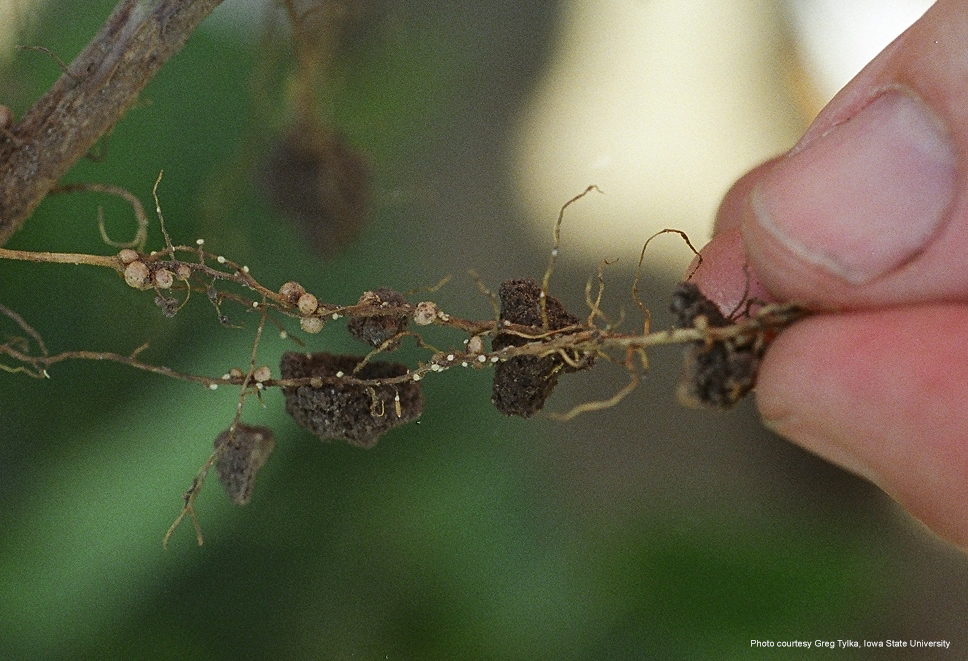
Analysis of more than two decades of data collected by Iowa State University from farmers’ fields in Iowa reveals that soybean cyst nematode (SCN) continues to develop increased reproduction on PI 88788, the most widely used SCN resistance in soybean varieties. These findings highlight the need for a more diversified approach to SCN management to protect soybean yields.
Will virulence to PI 88788 continue to increase?
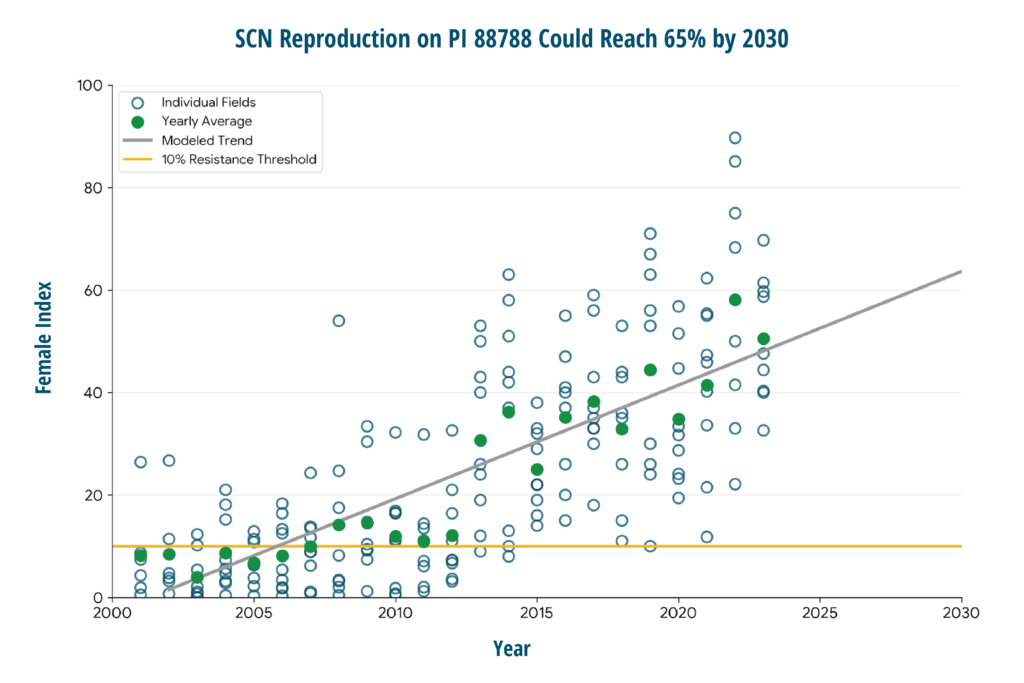
The analysis, recently published in Plant Health Progress, examined data from Iowa State University’s SCN-resistant soybean variety trials conducted across Iowa from 2001 through 2023. The work was funded by checkoff dollars from the Iowa Soybean Association. Results confirmed that trends identified nearly a decade ago have continued, with SCN virulence to PI 88788 resistance increasing at a rate nearly identical to what the researchers predicted in 2017.
The ability of SCN populations in the variety trial fields to reproduce on PI 88788 resistance increased approximately 2% annually from 2001 through 2023. Also, analysis of data from the experiments predicts that by the end of this decade, PI 88788 resistance may provide only about 40% control of SCN, resulting in average yield losses of approximately 9 bushels per acre, or 12% of yield potential, if current management practices do not change. Effective SCN resistance in soybeans provides 90% or more control of SCN.
“It’s interesting that predictions we made nearly a decade ago proved remarkably accurate,” says Greg Tylka, Iowa State University nematologist and co-author of the study. “SCN populations continue to adapt to PI 88788 resistance, and if we don’t diversify how we manage the pest, farmers can expect that trend to continue.”
Why is monitoring Peking resistance more important than ever?
Peking is currently the only other SCN resistance breeding line used in soybean varieties available for Iowa. Although the researchers did not detect a significant statewide increase in SCN reproduction on Peking SCN resistance in the studies, they found more individual variety trial fields with elevated SCN reproduction on Peking between 2016 and 2023 (8 years) than during the previous 15 years of the study.
The findings highlight the importance of continued monitoring of SCN populations as use of soybean varieties with Peking resistance expands. The HG type test determines the percentage of SCN control provided by Peking, PI 88788, and five other SCN resistance breeding lines not currently available in commercial soybean varieties.
“We cannot afford to repeat the mistakes made with PI 88788,” says Tylka. “Another wholesale shift to a single resistance source, like Peking, is likely to accelerate adaptation by SCN populations. The goal is long-term management that preserves the effectiveness of all available resistance sources.”
The soybean industry has already begun increasing the availability of varieties containing Peking resistance, creating opportunities for farmers to adopt a more balanced management strategy. Instead of relying exclusively on one resistance source, experts recommend rotating soybean varieties with different sources of SCN resistance and incorporating additional SCN management tools, such as nematode-protectant seed treatments and nonhost crops, when appropriate.
How can farmers avoid overreliance?
A balanced approach that incorporates both PI 88788 and Peking resistance could help slow the development of virulent SCN populations while maintaining yield performance and reducing SCN population densities over time, according to the study.
“Soybean cyst nematode remains the most damaging soybean pathogen in North America, and it’s not going away,” Tylka says. “The good news is that farmers still have effective tools available today. By diversifying resistance sources and avoiding overreliance on any one strategy, farmers can reduce risk and help protect soybean yields for years to come.”
The researchers noted that although the experiments were conducted in Iowa, published survey data and observations from other Midwestern states indicate that increasing SCN virulence to PI 88788 is a regional issue, not one unique to Iowa.
Experts with The SCN Coalition encourage farmers to test soil for SCN after harvest and enter those results into the SCN Profit Checker to better understand potential yield loss and profit risk.
For more information about SCN and management recommendations, visit https://www.thescncoalition.com/.